
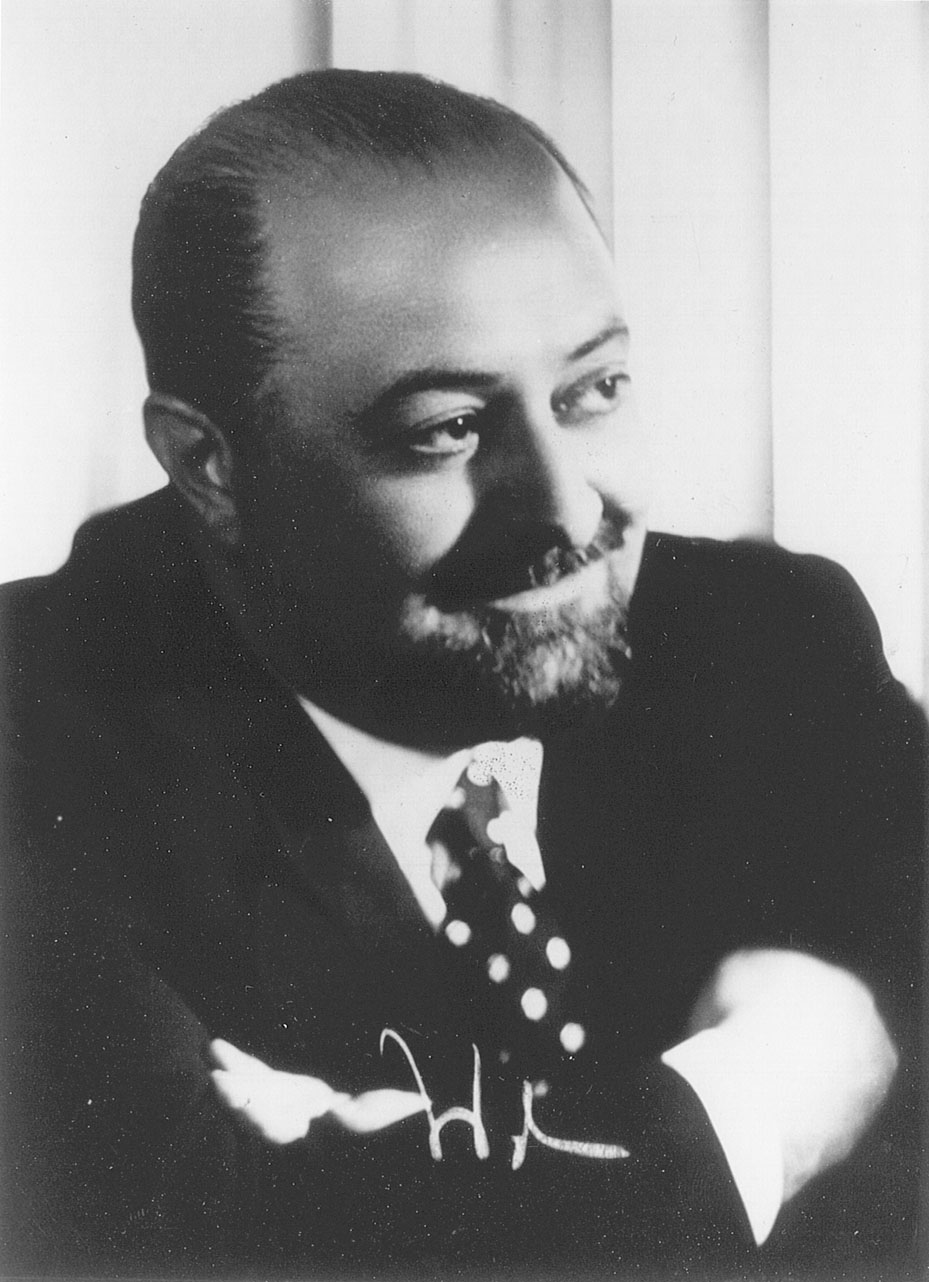
Homero Manzi
Homero Nicolás Manzione Prestera, better known as Homero Manzi (November 1, 1907 – May 3, 1951) was an Argentine tango lyricist, author of various famous tangos. He was also a filmmaker, notable for his work during the classical era of Argentine cinema. He was born on November 1 of 1907 in Añatuya (province of Santiago del Estero), Argentina. Manzi was interested in literature and tango since he was young. After a brief incursion in journalism, he worked as a literature and Spanish professor but for political reasons (in addition to his membership in the Unión Cívica Radical) he was expelled from his professorship and decided to dedicate himself to the arts. In 1935 he participated in the beginnings of FORJA (Fuerza de Orientación Radical de la Joven Argentina – Force of Radical Orientation of the Young in Argentina), group whose position has been classified as “people's nationalism”. It was centered almost exclusively in the problems in Argentina and Latin America. They manifested to “reconquer the political Sunday from our own land” since it was considered that the country was still in a colonial situation. In relation to the European conflict at the time, it supported a neutral position sustaining that there was no great interest was in play in Argentina or Latin America, it was more of a rejection position towards fascism just as much as communism. In 1934 Manzi founded Micrófono ("Microphone") magazine which covered subjects related to radio telephony, Argentine movies and film making. He wrote the screenplay for Nobleza Gaucha in 1937 in collaboration with Hugo Mac Dougall, and a new version of the silent movie of 1915, Huella ("Footprint") (1940), for which they received second prize from Buenos Aires City Hall. He also worked in Confesión ("Confession") (1940), without achieving commercial success with any of these movies. In 1940 Manzi started what would be a long collaboration with Ulyses Petit de Murat, writing the screenplay for Con el dedo en el gatillo ("Finger on the trigger") (1940) Fortín alto ("High Fort") (1940), and The Gaucho War (1942). At the 1943 Argentine Film Critics Association Awards, Manzi and Murat won the Silver Condor Award for Best Adapted Screenplay for their screenplay of The Gaucho War which proved highly successful. The early death of the poet was caused by cancer on Thursday, May 3, 1951. |
Birth and Death Data: Born Añatuya (human settlement), Died May 3, 1951 (Buenos Aires (capital and largest city of Argentina) )
Date Range of DAHR Recordings: 1927 - 1949
Roles Represented in DAHR: lyricist, songwriter, author
 = Recordings are available for online listening.
 = Recordings were issued from this master. No recordings issued from other masters.
Recordings (Results 1-25 of 51 records)
| Company | Matrix No. | Size | First Recording Date | Title | Primary Performer | Description | Role | Audio |
|---|---|---|---|---|---|---|---|---|
| Victor | [Vi cat 37589-A] | 10-in. | 1933-1934 | Esquinas porteñas | Mercedes Simone | Female vocal solo, with instrumental ensemble | lyricist | |
| Victor | BVE-40784 | 10-in. | 12/15/1927 | Viejo ciego | Juan Pulido | Male vocal solo, with instrumental ensemble | lyricist | |
| Victor | BAVE-44666 | 10-in. | fall 1929 | Valsecito de antes | Roberto Díaz | Male vocal solo, with guitars | lyricist | |
| Victor | BAVE-44830 | 10-in. | fall 1929 | Valsecito de antes | Joaquina Carreras ; Orquesta Típica J. Guido | Instrumental ensemble, with female vocal solo | lyricist | |
| Victor | BAVE-60985 | 10-in. | September 1931 | A su memoria | Alberto Gómez | Male vocal solo | lyricist | |
| Victor | BAVE-60990 | 10-in. | 10/1/1931 | A su memoria | Acuña-Díaz ; Orquesta Típica Sinfonica Lomuto | Instrumental ensemble, with male vocal duet | lyricist | |
| Victor | 65685 | 10-in. | 3/27/1933 | Milonga sentimental | Lely Morel | Female vocal solo | lyricist | |
| Victor | BAVE-66830 | 10-in. | June 1932 | A su memoria | Carlos Lafuente ; Trio Ciriaco Ortiz | Instrumental trio, with male vocal solo | lyricist | |
| Victor | BAVE-66924 | 10-in. | between September and October 1932 | Milonga sentimental | Mercedes Simone | Female vocal solo, with instrumental ensemble | lyricist | |
| Victor | BAVE-74002 | 10-in. | January 1933 | Milonga sentimental | Carlos Lafuente ; Orquesta Adolfo Carabelli | Instrumental ensemble, with male vocal solo | lyricist | |
| Victor | BAVE-74019 | 10-in. | January 1933 | Milonga sentimental | Gómez-Vila | Male vocal duet, with guitars | lyricist | |
| Victor | BAVE-74392 | 10-in. | December 1933 | De tu casa a mi casa | Mercedes Simone | Female vocal solo | lyricist | |
| Victor | BAVE-74461 | 10-in. | 3/23/1934 | Esquinas porteñas | Fernando Díaz ; Orquesta Típica Francisco J. Lomuto | Instrumental ensemble, with male vocal solo | lyricist | |
| Victor | BAVE-86667 | 10-in. | 10/4/1934 | Juan Manuel | Félix Gutiérrez ; Orquesta Típica Pedro Maffia | Instrumental ensemble, with male vocal solo | lyricist | |
| Victor | BAVE-86668 | 10-in. | 10/4/1934 | A través de los años | Félix Gutiérrez ; Orquesta Típica Pedro Maffia | Instrumental ensemble, with male vocal solo | lyricist | |
| Victor | BAVE-86807 | 10-in. | 4/4/1935 | Muchacho del cafetín | Edgardo Donato Muchachos | Instrumental ensemble, with male vocal solo | lyricist | |
| Victor | BAVE-86808 | 10-in. | 4/4/1935 | El vals de los recuerdos | Edgardo Donato Muchachos | Instrumental ensemble, with male vocal solo | lyricist | |
| Victor | BAVE-86841 | 10-in. | 5/9/1935 | Monte criollo | Jorge Omar ; Orquesta Típica Francisco J. Lomuto | Instrumental ensemble, with male vocal solo | lyricist | |
| Victor | BAVE-86843 | 10-in. | May 1935 | Vivir | Orquesta Adolfo Carabelli | Instrumental ensemble, with male vocal solo | lyricist | |
| Victor | BAVE-86844 | 10-in. | 5/13/1935 | Monte criollo | Alberto Gómez | Male vocal solo, with guitars | lyricist | |
| Victor | BAVE-86845 | 10-in. | 5/13/1935 | Muchacho del cafetín | Alberto Gómez | Male vocal solo, with guitars | lyricist | |
| Victor | BAVE-93377 | 10-in. | between 10/7/1936 and 10/27/1936 | Duerme | Hugo Gutiérrez | Male vocal solo | lyricist | |
| Victor | BAVE-93409 | 10-in. | between 11/17/1936 and 11/26/1936 | Milonga triste | Alberto Gómez | Male vocal solo, with instrumental ensemble | lyricist | |
| Victor | BAVE-93914 | 10-in. | 9/24/1937 | Abandono | Orquesta Típica Pedro Laurenz | Instrumental ensemble, with male vocal solo | lyricist | |
| Victor | BAVE-93918 | 10-in. | 9/28/1937 | Milonga de los fortines | Orquesta Típica Victor | Instrumental ensemble, with male vocal solo | lyricist |
Citation
Discography of American Historical Recordings, s.v. "Manzi, Homero," accessed December 26, 2025, http://adp.library.ucsb.edu/names/105867.
Manzi, Homero. (2025). In Discography of American Historical Recordings. Retrieved December 26, 2025, from http://adp.library.ucsb.edu/names/105867.
"Manzi, Homero." Discography of American Historical Recordings. UC Santa Barbara Library, 2025. Web. 26 December 2025.
DAHR Persistent Identifier
Linked Open Data Sources
LCNAR: Manzi, Homero, 1907-1951 - https://id.loc.gov/authorities/names/n88110470
Wikidata: Homero Manzi - https://www.wikidata.org/entity/Q940617
VIAF: https://viaf.org/viaf/139145970343532252736
MusicBrainz: Homero Manzi - https://musicbrainz.org/artist/24abe14b-6c65-4db8-853b-8457f84b9e90
Fast: https://id.worldcat.org/fast/226150 - https://id.worldcat.org/fast/226150
Wikipedia content provided under the terms of the Creative Commons BY-SA license
Feedback
Send the Editors a message about this record.