
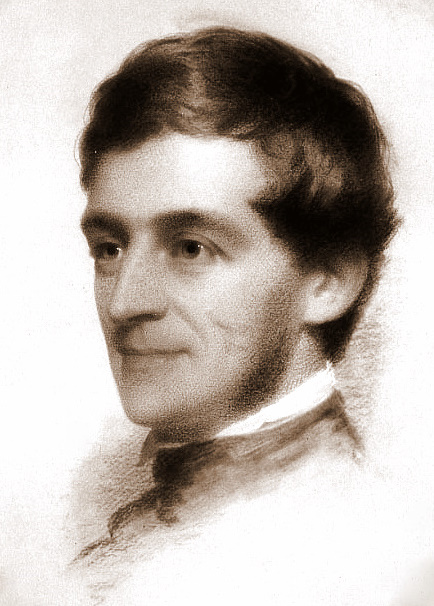
Ralph Waldo Emerson
Ralph Waldo Emerson (May 25, 1803 – April 27, 1882), who went by his middle name Waldo, was an American essayist, lecturer, philosopher, minister, abolitionist, and poet who led the Transcendentalist movement of the mid-19th century. He was seen as a champion of individualism and critical thinking, as well as a prescient critic of the countervailing pressures of society and conformity. Friedrich Nietzsche thought he was "the most gifted of the Americans," and Walt Whitman called Emerson his "master". Emerson gradually moved away from the religious and social beliefs of his contemporaries, formulating and expressing the philosophy of Transcendentalism in his 1836 essay, Nature. His speech "The American Scholar," given in 1837, was called America's "intellectual Declaration of Independence" by Oliver Wendell Holmes Sr. Emerson wrote most of his important essays as lectures and then revised them for print. His first two collections of essays, Essays: First Series (1841) and Essays: Second Series (1844), represent the core of his thinking. They include the well-known essays "Self-Reliance", "The Over-Soul," "Circles," "The Poet," and "Experience." Together with "Nature," these essays made the mid-1830s to the mid-1840s Emerson's most fertile period. Emerson wrote on a number of subjects, never espousing fixed philosophical tenets. He instead developed ideas such as individuality, freedom, the ability for mankind to achieve almost anything, and the relationship between the soul and the surrounding world. Emerson's "nature" was more philosophical than naturalistic: "Philosophically considered, the universe is composed of Nature and the Soul." Emerson is one of several figures who "took a more pantheist or pandeist approach, by rejecting views of God as separate from the world." He remains among the linchpins of the American romantic movement, and his work has greatly influenced the thinkers, writers, and poets that followed him. "In all my lectures," he wrote, "I have taught one doctrine, namely, the infinitude of the private man." Emerson is also well-known as a mentor and friend of Henry David Thoreau, a fellow Transcendentalist. |
Birth and Death Data: Born January 1, 1803 (Boston (capital and largest city of Massachusetts, United States)), Died April 27, 1882 (Concord (town in Middlesex County, Massachusetts, United States) )
Date Range of DAHR Recordings: 1913 - 1924
Roles Represented in DAHR: author
 = Recordings are available for online listening.
 = Recordings were issued from this master. No recordings issued from other masters.
Recordings
| Company | Matrix No. | Size | First Recording Date | Title | Primary Performer | Description | Role | Audio |
|---|---|---|---|---|---|---|---|---|
| Victor | B-13994 | 10-in. | 10/23/1913 | The mountain and the squirrel | Cora Mel Patten | Recitation | author | |
| Victor | C-14467 | 12-in. | 2/17/1914 | Home thoughts from abroad | Cora Mel Patten | Recitation | author | |
| Victor | B-30566 | 10-in. | 8/12/1924 | At the end of the sunset trail | Marcia Freer ; Lewis James | Female-male vocal duet, with orchestra | author | |
| Columbia | 140144 | 10-in. | 11/17/1924 | At the end of the sunset trail | Lewis James ; Elliott Shaw | Male vocal duet, with instrumental quintet | author |
Citation
Discography of American Historical Recordings, s.v. "Emerson, Ralph Waldo," accessed January 21, 2026, http://adp.library.ucsb.edu/names/314029.
Emerson, Ralph Waldo. (2026). In Discography of American Historical Recordings. Retrieved January 21, 2026, from http://adp.library.ucsb.edu/names/314029.
"Emerson, Ralph Waldo." Discography of American Historical Recordings. UC Santa Barbara Library, 2026. Web. 21 January 2026.
DAHR Persistent Identifier
External Sources
Wikipedia: Ralph Waldo Emerson
Discogs: Ralph Waldo Emerson
Grove: Ralph Waldo Emerson
IMSLP: Ralph Waldo Emerson
RILM: Ralph Waldo Emerson
Britannica: Ralph Waldo Emerson
Linked Open Data Sources
LCNAR: Emerson, Ralph Waldo, 1803-1882 - https://id.loc.gov/authorities/names/n78085476
Wikidata: Ralph Waldo Emerson - https://www.wikidata.org/entity/Q48226
VIAF: https://viaf.org/viaf/27079964
MusicBrainz: Ralph Waldo Emerson - https://musicbrainz.org/artist/d54afda5-1dbb-489a-a150-ef9c33b5c8ac
Getty ULAN: Emerson, Ralph Waldo - https://vocab.getty.edu/ulan/500246883
Fast: https://id.worldcat.org/fast/28085 - https://id.worldcat.org/fast/28085
Wikipedia content provided under the terms of the Creative Commons BY-SA license
Feedback
Send the Editors a message about this record.